
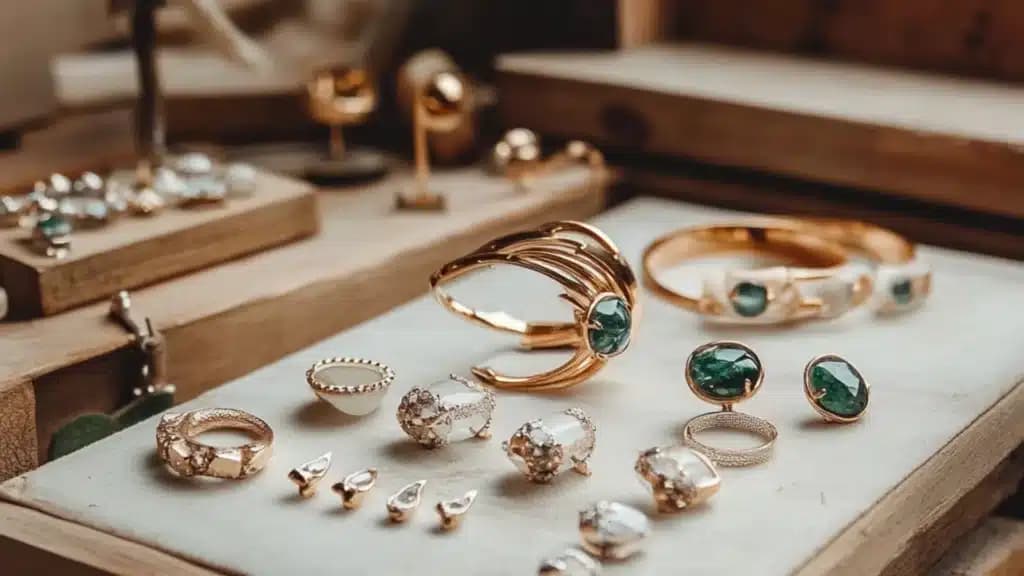
No matter whether your company is in fine jewelry, fashion jewelry, the wedding collection or luxury accessories space, knowing the custom production process is fundamental to establishing a successful product line.
And, whether you’re a new company starting the jewelry business or an existing merchant looking to extend your offerings, bespoke jewelry manufacture allows you to develop unique pieces that are in line with your brand, customer demographic and market trends. It also allows firms to have better control over the materials, quality of manufacturing, pricing and inventory management.
A complete reference covering all aspects of Custom Jewelry Manufacturers, from idea creation and material selection to production procedures, quality assurance, and selecting the correct manufacturing partner.
What is Custom Jewelry Production?
The process of making usually starts with an idea or design concept. The idea is improved via sketching or computer modelling, before being made into a tangible prototype. Brands have total control of all the design elements from stone selection, kind of metal, proportions, finishing style, engraving, textures and all things aesthetic. This kind of customisation allows firms to develop collections that are difficult for rivals to copy.
There are several steps which have to be properly coordinated to go from the idea to the final piece of jewellery. Each process adds to the quality, durability and look of the finished product.
The first step is idea development. Fashion trends, historical inspirations, client demands or totally creative ideas may be sources of inspiration.
From then the design direction is set and comprehensive three dimensional models are created in sophisticated CAD software. With digital rendering, we can analyse every aspect, measurement, stone arrangement and structural element before we start manufacturing. This step helps to remove design problems and allows for changes to be made without wasting important resources.
Once the CAD has been approved, a prototype is made, either by wax carving, by resin printing or by sophisticated 3D printing. The prototype allows designers to assess dimensions, comfort, aesthetics and wearability before to mass production.
Now the next step is to make the mould and cast. Precision Casting: Melting precious metals such as gold, silver, platinum or an alternate alloy and pouring them into properly prepared moulds using precision casting procedures. The castings are cleaned and honed before assembly takes place.
The Full Custom Jewelry Manufacturing Process
Many makers now work with other metals for modern collections. These materials are more affordable, but they also have distinct aesthetic qualities and increased scratch resistance for particular product categories.
The selection of gemstones is just as important. It helps to improve quality of the product, increase client trust and boost the long-term brand image.
Advantages of Custom Jewelry Manufacturing for Jewelry Brands
Custom jewellery production has several benefits that go well beyond product personalisation. Custom manufacturing offers creative and financial opportunities to jewellery firms seeking sustainable expansion and market uniqueness.
One of the biggest pluses is exclusivity. Brands may select specific materials, manner of manufacture, finishing and quality criteria throughout manufacturing. This degree of supervision leads in more consistent goods and fewer quality problems. Custom manufacturing may also increase profit margins. Exclusive jewellery has a lot more perceived worth. This gives marketers the opportunity to create premium pricing while still keeping customers happy with a better quality product.
Better customer interactions are also facilitated by customisation. For many customers they want to see things that represent their own interests, accomplishments or emotional ties. The experience of personalised collections is memorable, and likely to lead to repeat purchases.
A further benefit is the potential to scale. As demand develops, the production capacity may be increased, while retaining the design consistency and the quality of the manufacture. Conscientious producers buy just what is legally available, use ecologically friendly manufacturing processes and use fair labour practices.
Lead times, price transparency, flexibility of manufacturing and after-sales support should also be considered in the selection process. Working with a solid manufacturer for the long term helps to establish stability and aids in enabling future collection growth.
Through the selection process, a thorough review eliminates production risks and sets the stage for ongoing company success.
Future Trends of Custom Jewelry Manufacturing Industry
Ultimately bespoke manufacturing provides jewellery businesses the opportunity to find a sweet spot between innovation, operational efficiency, and profitability in a competitive industry.
Experience in manufacturing must be given great consideration. Companies that have a wide range of experience with numerous types of jewellery are frequently better able to manage intricate designs, technical issues and a variety of manufacturing needs.
Production skills are just as vital. Brands need to make sure manufacturers have up-to-date equipment, qualified workers and the capacity to expand production as company demands evolve.
Design help may be of great value particularly for younger jewellery businesses. Manufacturers providing CAD development, prototype building, technical support and design optimisation services may help streamline product development and reduce expensive mistakes.
Manufacturers may construct elaborate designs with astonishing accuracy, using modern design software, precise equipment and sophisticated manufacturing procedures, while retaining the artistic value of manual finishing. But no matter how much technology you have, the human touch of a talented artisan is always a must for manufacturing fine handmade jewellery.
To make sound judgements, choose the proper manufacturing partner, manage production effectively, and consistently produce items that surpass consumer expectations, jewellery businesses must understand the whole jewellery manufacturing process. In this tutorial, we’ll walk you through each step of the bespoke jewellery manufacturing process and how companies can produce profitable high-quality collections via a systematic and collaborative approach to production.
The quality control system should be comprehensive and implemented uniformly at each level of production. Rigorous inspection methods ensure product uniformity and minimise flaws prior to shipping.
Summary
The one thing that makes bespoke manufacturing so awesome is that it is unique. Each collection is specially made for the company, diminishing parallels with mass-produced jewellery on the market. Exclusive designs enable firms to improve their positioning and provide consumers with things they can’t get readily elsewhere.
Custom Jewelry Manufacturers also enhance brand consistency. Custom manufacturing also offers flexibility. They may also choose the product size, metal options, gemstone selection, ornamental elements, surface treatments, and packaging needs. This enables organizations to develop collections that are exclusive to certain client groups without losing their overall identity.