
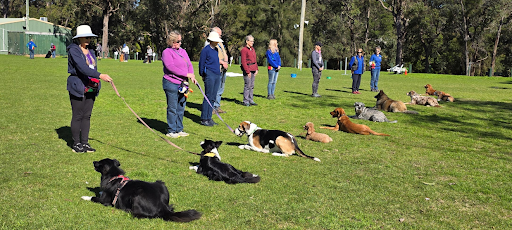
In group or one on one setting, together with their owners, dogs learn obedience skills, socialisation habits, and behaviour management through dog training classes, which are structured sessions made for this purpose. Along with improving communication between pet and owner, building a dog’s confidence stands as the main purpose of these classes, and everyday behaviour concerns like pulling on the leash, jumping up, or reacting to other dogs also get addressed through them. Instead of piecing together advice from videos or books, joining a class is, for most owners, the fastest way of getting consistent and guided support.
What Happens in a Group Setting
Usually led by a qualified trainer, several dogs along with their owners come together in one space, and this is what a typical group class looks like. Since the environment stays controlled, distractions are introduced to dogs step by step, not all together at once. Step by step, commands get taught to owners first, and after that, time is given so they can practise with their own dog, while close observation and correction of technique is done by the trainer.
Much better than one on one sessions at home, this kind of setup mirrors what happens in the real world. A dog that manages to sit and stay well in a quiet lounge room, quite often, behaves in a very different way once a park full of other dogs, people, and noises is where it finds itself. Safely, that gap gets bridged through group classes.
Why Group Learning Works for Dogs
By nature, dogs are social animals, so through exposure and repetition, much of their behaviour gets shaped over time. Once dogs spend time around other dogs in a setting that is calm and supervised, several things become easier for them.
- Over time, tolerance towards other dogs and unfamiliar people gets built
- Even when distractions are present, focus is something that gets taught
- Fear based reactions or overexcitement, these tend to reduce
- Across different environments, behaviour manages to stay more consistent
Not just their dogs, owners too get benefit from all this. Once a trainer is watched handling different personalities and problem behaviours as they happen, understanding why certain techniques work, and how these can get applied back home, becomes something much easier.
What Skills Are Typically Covered
Before more advanced or situational skills get introduced, foundational obedience is what most programs focus on first. Among the common areas that get covered are these:
- Sit, stay, come, and leave it, these basic commands
- Without pulling, walking on a loose leash
- Instead of jumping on people, greeting them in a polite way
- Even with distractions around, recall
- In an environment that stays busy, settling down calmly
In some programs, impulse control exercises also find their place, and these help a dog pause for a moment and think, before it reacts to something that feels exciting or stressful.
How to Know If a Dog Is Ready
Both age and temperament, these play a role when the right starting point needs choosing. Basic commands and foundational socialisation, puppies as young as a few months can usually start with these, once vaccination has been done appropriately. For adult dogs joining general classes, little to no prior training is also fine, though before that, temperament often gets assessed by a trainer, just so the group environment can be confirmed as suitable.
For dogs that carry significant reactivity, aggression, or anxiety issues, individual sessions sometimes become necessary before a group gets joined, simply so overwhelm does not happen, either for the dog itself or for other dogs already in the class.
Frequently Asked Questions
How long does it take to see results?
Within just a few weeks, once attendance and home practice stay consistent, improvement is what most owners tend to notice. But since different settings need repetition for a skill to fully generalise, several months is usually what long term behaviour change takes.
Do classes work for older dogs?
Yes, definitely they do. Even though commands often get picked up faster by puppies, new behaviours can still be learned, without doubt, by adult and senior dogs as well. A bit more patience might be needed along the way, though age on its own rarely becomes a real barrier.
Is one class enough, or is a course needed?
Through a single session, a concept can get introduced, but real behaviour change, that actually comes from weekly repetition inside a structured course, since consistency, not some one off exposure, is how dogs end up learning best.
Can nervous or shy dogs join group classes?
For many nervous dogs, controlled group exposure does bring benefit, though a pace that stays slower and more supportive becomes necessary for them. Distance from other dogs gets adjusted by a good trainer, and little by little, exposure increases, rather than interaction being forced too early.
Final Thoughts
In a real world setting, a practical and guided way of building obedience, confidence, and social skills is what dog training classes bring to the table. Whether fixing leash pulling is the goal, or improving recall, or just helping a dog feel more at ease around others, the tools and consistency needed for progress that lasts, both dogs and owners get this through structured classes.